
Brush Park is a historic neighborhood in Detroit, Michigan. Its broader boundaries are Mack Avenue to the north, I-75 to the east and south, and Woodward Avenue to the west.
Our organization began as the Brush Park Citizens District Council, a City-mandated, elected body of neighborhood residents that provided advisory input on urban renewal projects. In 2014, the City of Detroit Emergency Manager eliminated the Citizens District Councils. With encouragement from City officials, developers, and community stakeholders, the Council’s board reorganized as the Brush Park Community Development Corporation (CDC), a 501(c)(3) nonprofit organization.
Today, the CDC serves as an advisory organization that facilitates citizen participation in planning and development matters affecting Brush Park and promotes the neighborhood’s continued, responsible growth.

Architects who designed these mansions included Henry T. Brush, George D. Mason, George W. Nettleton, and Albert Kahn.[13] The French Renaissance style William Livingstone House (1892–93) on Elliot Street was one of Kahn's first commissions.
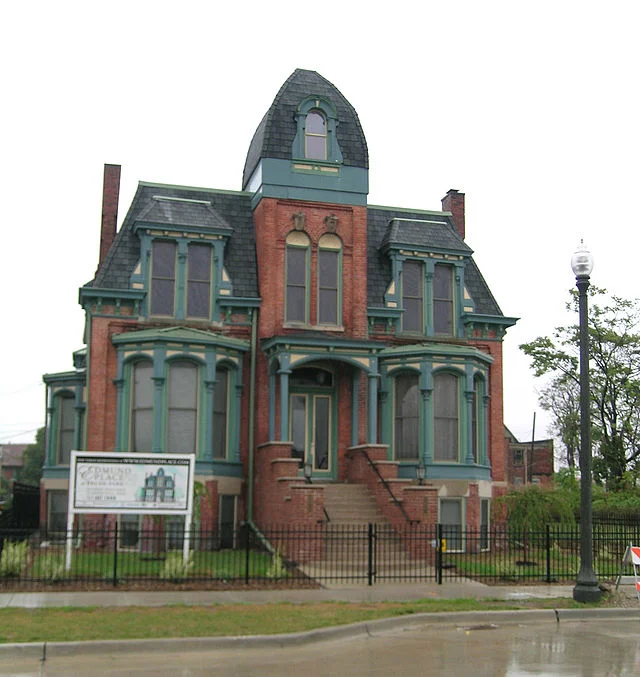
At present, about 80 original structures remain in the area. During the 19th century, around 300 homes were built in Brush Park, including 70 Victorian mansions. However, the neighborhood began to decline in the late 19th and early 20th century, when the advent of streetcars and then automobiles allowed prosperous citizens to live farther from downtown.
Neighborhood History
Beginning in the 1850s, entrepreneur Edmund Brush, son of Elijah Brush, the city's second mayor from its first incorporation, began developing his family's property, located conveniently close to downtown, into a neighborhood for Detroit's elite citizens. Homes were built in Brush Park beginning in the 1850s and peaking in the 1870s and 1880s; one of the last homes built was constructed in 1906 by architect Albert Kahn for his personal use. Other early residents of Brush Park included lumber baron David Whitney Jr.; his daughter Grace Whitney Evans; Joseph L. Hudson, founder of the eponymous department store;[9] lumber baron Lucien Moore; banker Frederick Butler; merchant John P. Fiske; Dime Savings Bank president William Livingstone Jr.;[10] and dry goods manufacturer Ransom Gillis. In the late 19th century, the Brush Park neighborhood became known as the "Little Paris of the Midwest".
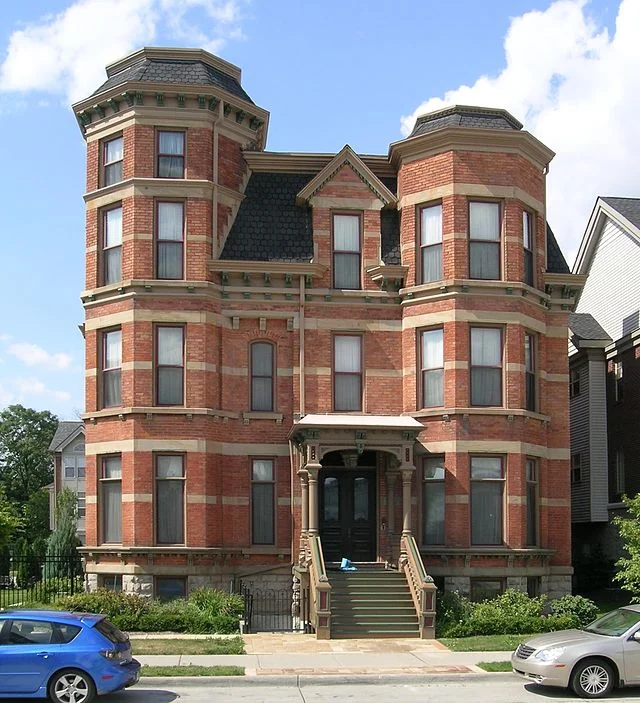
Brush Park's revival began in the 1990s and has since accelerated. New condominiums have been built in the southern part of the district, near the Fisher Freeway, and a number of the older mansions have been restored.